Dentistry
Dentistry
Our dental-grade fees are capped at the upper limit of the provided estimate, so you won’t be expected to pay more than the quoted range.
Dental Grading:
Dental disease is one of the most common health conditions seen in dogs and cats. The following grading system helps assess the severity of periodontal (gum) disease and guides recommendations for treatment.
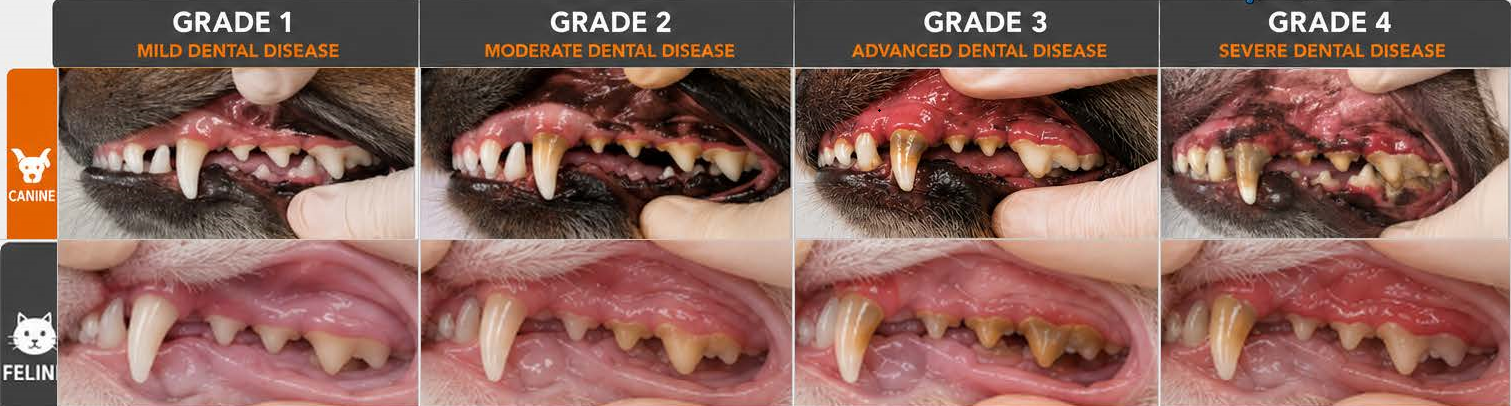
G1 – Mild Dental Disease
- Mild redness of the gum margin, affecting less than 1 mm of gum tissue.
- Mild accumulation of plaque and/or tartar on the teeth.
- Professional dental cleaning and regular home dental care are recommended to prevent progression.
G2 – Moderate Dental Disease
- Redness and/or swelling of the gums extending greater than 1 mm from the gum margin.
- Mild to moderate plaque and tartar accumulation.
- Early gum recession may be present.
- Professional dental treatment, including dental radiographs, and subgingival cleaning is recommended to prevent further deterioration.
G3 – Advanced Dental Disease
- Heavy plaque and tartar accumulation on the teeth.
- Gum recession may be evident, exposing tooth roots.
- Tooth mobility may be present, indicating loss of supporting bone and periodontal structures.
- Significant periodontal disease is present and may cause discomfort, infection, and reduced tooth stability.
- Comprehensive dental treatment, including dental radiographs, periodontal therapy and possible tooth extractions, may be required.
G4 – Severe Dental Disease
- Severe plaque and tartar accumulation.
- Marked gum recession and severe gum inflammation.
- Teeth are likely to be mobile, loose, fractured, or otherwise compromised with advanced bone loss.
- Bleeding gums and/or pus discharge may be present, indicating active infection.
- Severe periodontal disease can cause chronic pain, difficulty eating, tooth loss, and may contribute to systemic health issues.
- Extensive dental treatment, including dental radiographs, multiple extractions and management of infection, is often necessary.
What’s Involved in a Dental Procedure?
We take every step to ensure your pets procedure is thorough, safe, and as comfortable as possible. Every procedure includes:
- General anaesthetic for stress-free, comprehensive care.
- Opiate based premedication to reduce stress, reduce the amount of anaesthesia required, ensure pain is managed prior to the dental, as well as make for a more comfortable and calmer recovery post operatively.
- Patient warming & IV fluids (with pre-placement numbing cream) to keep the blood pressure steady – supporting the heart and other organs, maintaining hydration and aiding recovery.
- Continuous monitoring by a trained qualified veterinary nurse (O2, CO2, HR, BP, RR, temperature).The nurse watches vital signs, capillary refill times & temperature, ensuring everything stays stable, minimising risks & keeping your pet safe & comfortable throughout the dental.
- Thorough oral exam- individual tooth assessments and charting.
- Dental x-rays (if needed) to check below the gumline . Radiographs assess the 60% of the tooth below the gum line and detect bone damage. Required for Grades 2–4. Cats are more prone to hidden issues like resorptive lesions, so X-rays are also required at Grade 1. In dogs, these issues are less common, so X-rays aren’t usually needed at Grade 1.
- Professional scale & polish– removes plaque and tartar build-up that contribute to dental disease. Polishing smooths tooth surfaces to reduce future plaque build-up.
- Extractions,oral surgery and pain relief when required. Extractions are performed if disease is found. Nerve blocks are used for pain relief, and dissolvable stitches may be needed.
- Postoperative/ Take-home pain relief and antibiotics are essential for your pet’s comfort and recovery. Pain relief helps manage discomfort after extractions, and antibiotics reduce the risk of infection during healing.
- Pre-anaesthetic blood test (PAS) is optional but recommended. The test will assist our team in assessing your pets overall health & ensure they’re fit for anaesthesia.
- Brachycephalic Protocol – for flat-faced breeds (e.g. Pugs) need extra anaesthetic care, including added meds and monitoring.
- ‘Chill’ Protocol – Optional for anxious pets; includes calming meds.
Why it Matters:
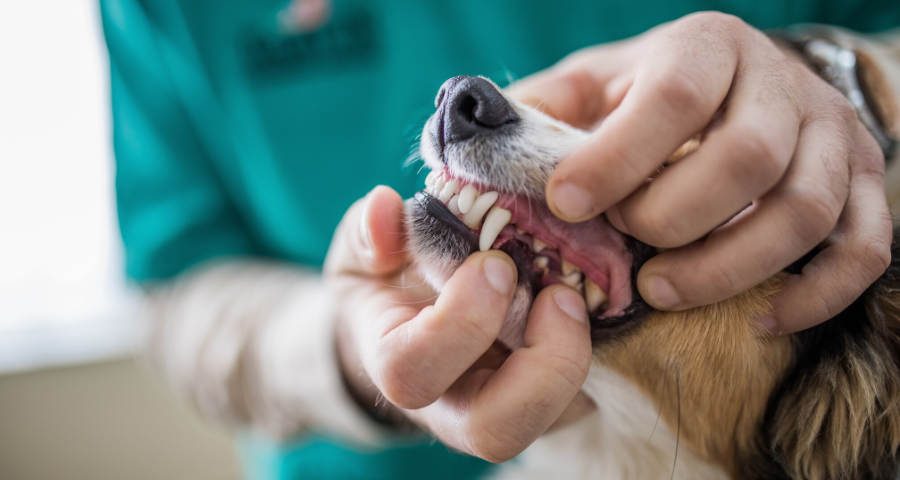
Periodontal disease is progressive and can cause significant pain even when pets continue to eat normally. Over 80% of pets over age 3 have dental disease — and it’s more than just bad breath. If left untreated, it can lead to:
- Chronic pain and gum infections.
- Bacteria entering the bloodstream, affecting vital organs.
- Long-term impacts on your pet’s overall health and wellbeing.
Because pets often hide pain, dental disease may not be obvious until it’s advanced.
- ✔️ Regular dental care helps.
- Relieve pain.
- Prevent serious and costly issues.
- Support a longer, healthier life.
Pre anaesthetic Sceening:
Recommended even in young animals as it can be used to establish a normal baseline and can help uncover congenital abnormalities. Used to assess the function of your pets’ kidneys and liver as they are the organ responsible for filtering the medications used. If there is some disease there already an anaesthetic can compromise these organs further and potentially push them into renal failure. If you pet is found to have some renal disease we may alter the medications used or adjust our procedure plan. The blood test also checks your pets red and white blood cells for signs of infection or clotting deficiencies which again can alter the our procedure plan. Strongly recommended in cats and dogs over 7 years of age. The blood test will be done on the morning of the procedure prior to any medications being given.
Brachycephalic Breeds
Short nosed breeds (brachycephalics), such as Pugs/ French bulldogs, have a higher risk of regurgitating while under anaesthetic, as a result of their altered anatomy. While under anaesthesia, regurgitation can lead to burning the lining of the oesophagus. Inhalation of the regurgitated contents may also cause aspiration pneumonia (infection in the lungs). To avoid this happening and to improve your pets safety during a general anaesthesia, we recommend using medication to prevent vomiting, as well as antacids, before and after the procedure. Please speak to a veterinarian in order to determine if this precaution is necessary for your dog.
Highest Safety Precautions
As Malvern Vet Hospital is as an accredited veterinary clinic, we are able to boast an extremely high safety record because of the numerous safety protocols in place, such as:
- Pre-operative Opiate pain relief to ensure your pet is calm and comfortable – STANDARD care.
- PLUS: Medication that stops pain at the level of the brain – STANDARD care.
- PLUS: NSAID pain relief – STANDARD care.
- PLUS: Take home NSAID pain relief – STANDARD care.
- Heated operating table and patient warming – STANDARD care.
- Heated recovery cages- STANDARD care.
- IV fluids during GA- STANDARD care.
- Onsite Pre-anaesthetic screening including comprehensive biochemistry panel AND comprehensive haematology panel – OPTIONAL care.
- Multi-parameter anaesthetic monitoring throughout the anaesthesia including SPO2, CO2, heart rate, Blood pressure (MAP, SP & DP), temperature- STANDARD care.
- Qualified theatre nurses trained in anaesthesiology monitoring each patient – STANDARD care.
- High risk patient protocols (eg Brachycephalic protocols).